What Does 9x7mm Mean for Moissanite Size—and How Big Is That?
When you see “9x7mm moissanite” on a ring listing, it describes the stone’s face-up measurements: about 9 millimeters long by 7 millimeters wide. It does not tell you the stone’s carat weight, and it doesn’t tell the whole story of how large it will look on your hand. Shape, depth, setting, finger size, and even the stone’s cut all affect the impression.
Still, 9x7mm is a useful starting point. It’s a popular size for oval center stones: noticeable without automatically overwhelming the setting. If you’re comparing rings, this stone size guide will help you picture the dimensions, understand the mm to carat comparison, and choose a design that feels like you—not like a rule you’re expected to follow.
What “9x7mm” Actually Measures
Millimeters measure the stone’s length and width when you look down at it from above. For an oval, 9x7mm means roughly 9mm from end to end and 7mm across its widest point. In inches, that’s approximately 0.35 by 0.28 inches—small numbers on paper, but a visible presence on a ring.
The measurement is usually approximate. A stone may vary slightly because of its cut, outline, or the manufacturer’s tolerances. And two stones with the same length and width can look different: one may have a fuller, rounder outline, while another appears longer and slimmer.
- 9mm: the stone’s length, measured from end to end.
- 7mm: the stone’s width at its broadest point.
- Shape: an oval is a common choice at this ratio, but dimensions alone don’t identify a cut.
- Depth: measured from the top of the stone to its bottom; it can affect both appearance and weight.
For an oval, the 9:7 ratio is about 1.29. That makes it moderately elongated rather than extremely narrow. If you like an oval that feels balanced and softly stretched, it’s a proportion worth trying on.
How Big Does a 9x7mm Moissanite Look on a Hand?
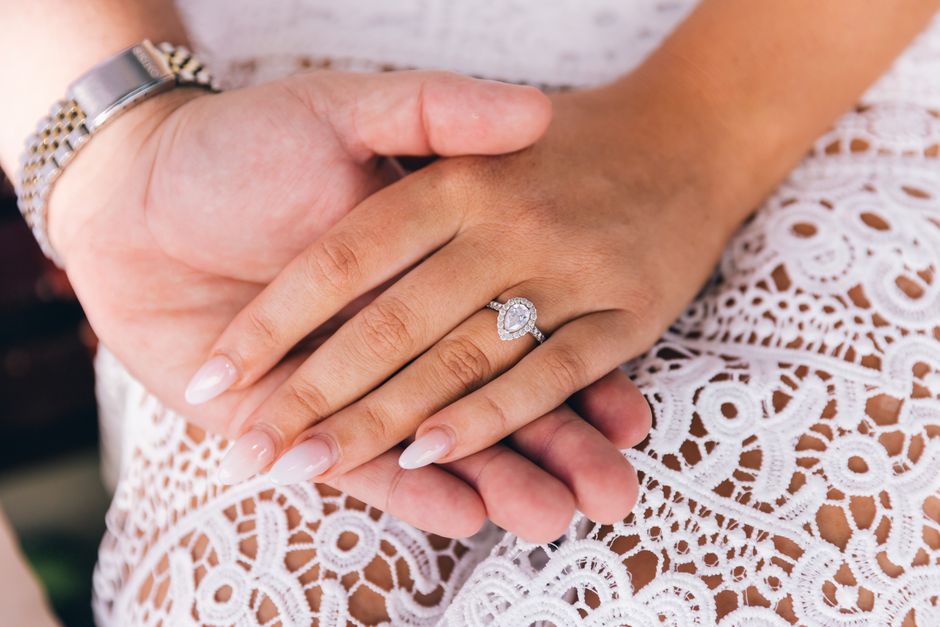
A 9x7mm stone covers a noticeable area on the finger, especially compared with a smaller, round center stone. But there isn’t one universal answer to “How big will it look?” A stone’s footprint takes up more or less visual space depending on your finger width, ring size, and the design around it. A 9x7mm oval may feel generous on a slender finger and more understated on a wider hand.
Try to compare rings in person if you can. If that isn’t practical, use a paper or screen template at true size: draw a 9mm by 7mm oval, cut it out, and place it where the ring will sit. A printed template is only reliable if it’s printed at 100% scale, so check it with a ruler. You can also look for photos of rings on hands with a similar ring size, while remembering that lighting and camera perspective can make stones appear larger or smaller.
The Setting Changes the Impression
Prongs, a bezel, a halo, and a raised gallery each change how the center stone reads. A halo adds a border of smaller stones, increasing the overall outline of the ring. A slim solitaire gives the oval a clean, uninterrupted profile. A bezel wraps the stone in metal for a more defined edge and a modern feel. None is automatically “better”; the right choice depends on your style, daily routine, and how secure or low-profile you want the ring to feel.
I keep a running mental list of settings that snag on knits. High-set prongs and delicate details can catch on sweaters, scarves, or pockets, so run a fingertip over the setting and try it with a textured sleeve. Also ask how the band feels between your fingers. A ring can look beautiful from above and still feel too wide or uncomfortable in everyday wear.
9x7mm Moissanite: A Stone Size Guide and mm to Carat Comparison
Millimeters and carats describe different things. Millimeters tell you a stone’s dimensions; carats measure weight. Because stones have different shapes and depths, there is no exact conversion from 9x7mm to a single carat number.
For a rough reference, a well-proportioned 9x7mm oval may have a face-up size similar to a diamond oval in the neighborhood of roughly 1.5 to 2 carats. Treat that as a visual comparison, not a guarantee. A deep-cut stone can carry more weight below the surface without looking larger from above. A shallower stone may spread its face-up area differently. Moissanite also has a different density from diamond, so its actual weight can differ at the same dimensions.
What you’re comparing What it tells you What it doesn’t tell you 9x7mm measurements The stone’s approximate length and width from above Exact carat weight or how it will look on every hand Carat weight The stone’s weight Its precise face-up size or outline Diamond-equivalent comparison A rough way to describe similar visual spread The moissanite’s actual weight or a guaranteed matchWhen shopping, ask the seller for the stone’s exact measurements, depth, and stated weight. If a listing uses “diamond equivalent weight,” ask what that means for that particular stone. A helpful seller should be able to explain whether a carat figure refers to actual moissanite weight or an estimate of comparable diamond appearance.
Moissanite, Light, and the Look You Want
Moissanite is known for vivid sparkle and flashes of color. In some lighting, that rainbow-like fire is part of the appeal; in other settings, you may prefer the quieter look of a different cut or stone. A 9x7mm measurement won’t tell you how the stone sustainable ring materials handles light, so look for close-up videos in natural light as well as bright studio lighting.
It’s also worth checking the brand’s information about materials and sourcing. Moissanite is commonly lab-created, but the setting’s metal and any accent stones have their own sourcing considerations. If a company is vague about metal quality, stone origin, or warranty terms, ask direct questions before you buy. Ethical shopping isn’t a mood-killer; it’s part of knowing what you’re choosing.
Breaking Engagement Ring Traditions
There’s no required stone size, shape, or price for an engagement ring. A 9x7mm moissanite can be a bold choice, a practical choice, or simply the shape and scale you happen to love. And it’s completely fine if your preferred ring is smaller, larger, colored, vintage-inspired, or not a traditional solitaire at all.
Modern engagement rings make room for personal priorities: comfort, budget, repairability, metal choice, and the story behind the design. If you’re making the decision together, talk openly about the budget and what matters most. Romance and practical questions can sit at the same table. In fact, knowing the budget early can make customization more enjoyable because you can focus on designs that are genuinely within reach.
Modern Settings and Silhouettes to Try
A 9x7mm oval works with a wide range of settings, from minimal to architectural. Consider how the ring looks from the side as well as from above. That profile affects how high the stone sits, how easily it catches on clothing, and whether a wedding band can sit flush beside it.
- Solitaire: keeps attention on the center stone and suits a clean, pared-back look.
- East-west: sets an elongated stone horizontally for a less expected silhouette.
- Bezel: frames the stone in metal and can offer a smooth, contemporary profile.
- Three-stone: adds side stones and creates more width, detail, and personal meaning.
- Low-profile setting: can be a practical option if you use your hands often or dislike a tall ring.
Check the band from the side and ask whether it will sit comfortably with a wedding band. Some settings leave a gap; others are designed to fit close together. Neither is a flaw, but it’s better to know before the proposal than after you’ve fallen for a ring that doesn’t pair the way you imagined.
Colored Gemstones as Storytelling
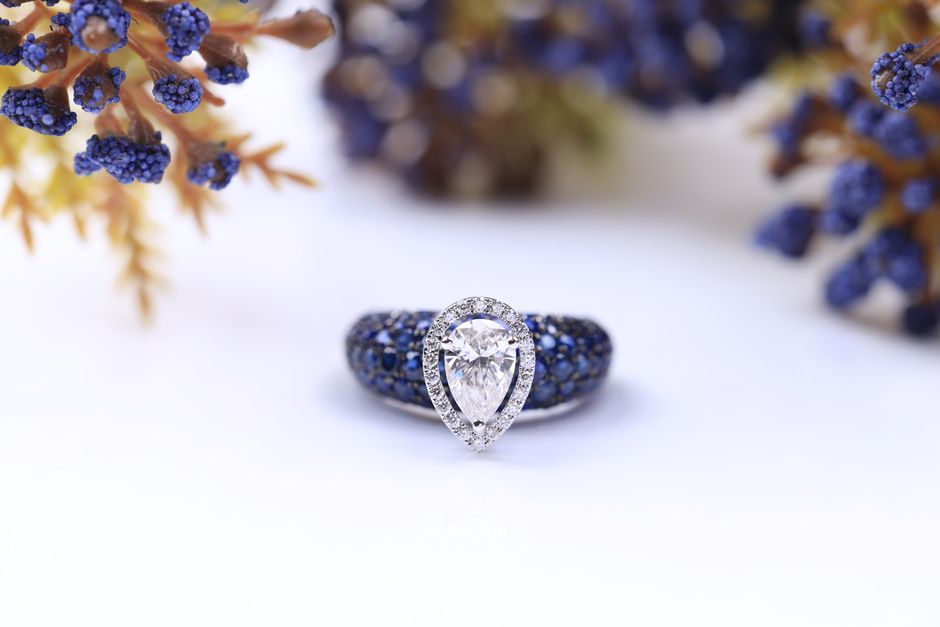
Moissanite doesn’t have to be the only focal point. Colored gemstones can turn a ring into a small piece of personal history: a birthstone, a favorite color, a stone connected to a place you love, or simply a shade that makes you happy. A sapphire, emerald, or other colored gem can sit beside a moissanite center stone, or take center stage on its own.
If you’re considering a colored gemstone, ask about its durability and care needs, not just its appearance. Different gems respond differently to daily wear, heat, chemicals, and knocks. A jeweler can help you match the stone to the way you plan to wear the ring. The story matters, but so does whether the design will hold up to your everyday life.
Bespoke Ring Design and Customization
Customization lets you make practical choices alongside aesthetic ones: stone orientation, setting height, prong style, band width, metal color, and accent stones. A bespoke design can also make room for a detail that means something to you, such as a hidden colored stone or an engraving inside the band.
Brands and resources can be useful starting points, but compare details rather than relying on a name alone. Bespoke Bride offers wedding inspiration that can help you explore different moods and ideas. Lily Arkwright and Modern Gents are two names shoppers may come across while browsing engagement rings and jewelry; review each current listing carefully for the specific stone measurements, materials, customization options, and policies that matter to you. Availability and product details can change, so confirm them directly before ordering.
For visual research, build Pinterest boards for ring inspiration and save examples by feature—setting height, band shape, stone outline, and metal color. That makes it easier to tell a jeweler what you like without needing to know technical terms. If you’re planning an invitations promo or tracking guest responses, a Google Sheet for RSVPs can keep that project organized separately from your ring decisions; no need to let wedding admin take over the fun parts.
Questions to Ask Before You Buy
- Are the listed 9x7mm measurements exact, approximate, or rounded?
- What is the stone’s depth and actual weight, and is any carat figure a diamond-equivalent estimate?
- Can I see the stone in natural light or view a video from several angles?
- What are the setting materials, care instructions, return terms, and warranty details?
- Will the ring sit comfortably beside a wedding band, and can it be resized or repaired?
The Bottom Line
A 9x7mm moissanite is a stone measured about 9mm long and 7mm wide—an eye-catching size often seen in oval engagement rings. Its visual spread may be comparable to a roughly 1.5-to-2-carat diamond oval, but that is only a broad mm to carat comparison; shape, depth, and density make exact conversions unreliable.
Use the measurements to narrow your search, then judge the ring by how it looks on your hand, how the setting behaves in daily life, and whether it feels comfortable between your fingers. The best choice isn’t engagement ring style quiz the stone that matches someone else’s expectations. It’s the one whose design, materials, and story make sense to you.